Negative Media Coverage Is Not Something To Be Trivialized
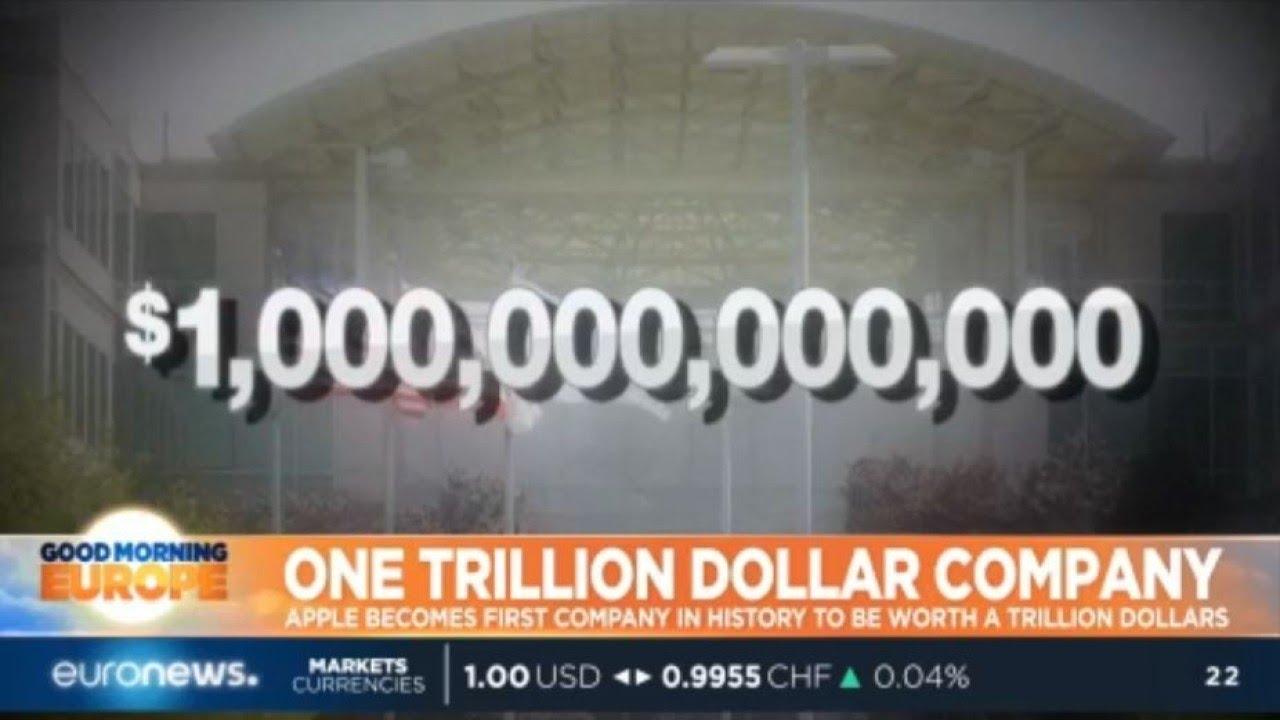
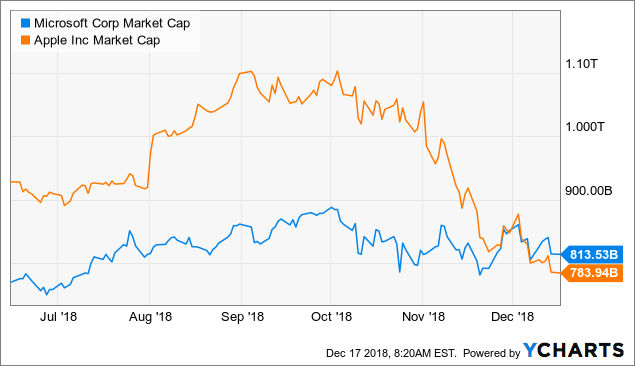
It was only in August when Apple Inc. (AAPL) became the first company in history to claim a trillion dollars in market capitalization. Up until early November, Apple retained its trillion-dollar status. However, weeks of correction has brought the market cap down to around $784 billion. It"s still a huge sum no doubt but there"s no hiding the fact that hundreds of billions of dollars evaporated.
Source: YouTube screengrab
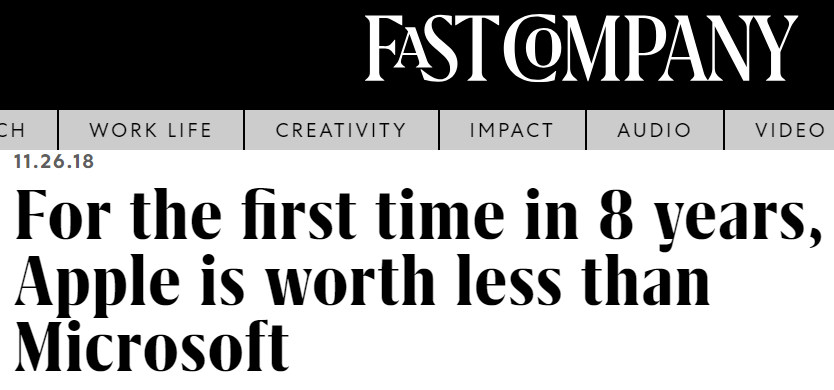
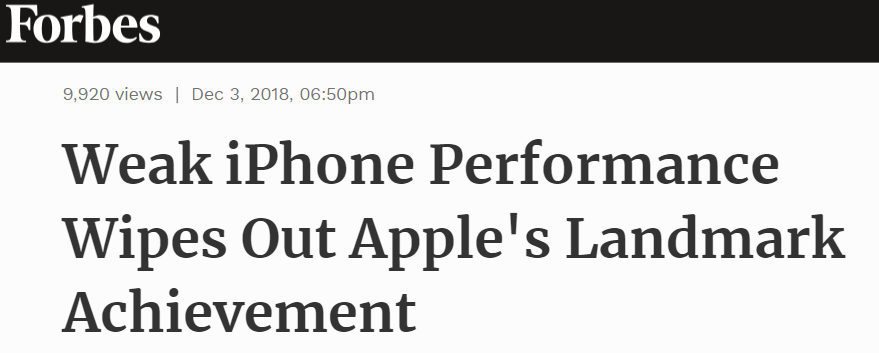
Recently, the humiliation has been exacerbated as the media rubbed salt on investors" wounds by harping the fact that for the first time in eight years, the market cap of Microsoft Corp. (MSFT) surpassed that of Apple"s. News outlets around the world rushed to highlight the misfortune.
Source: FastCompany
Source: Forbes
In the past few trading days, the gap has widened. Given the prevalence of algorithmic trading, it is possible that such negative media coverage has had a damaging impact on the share price of Apple.
MSFT Market Cap data by YCharts
There have been studies reflecting the domination of algorithmic trading in recent years. By 2012, the percentage of algorithmic trading had reached 85 percent, representing the lion"s share of market volume, according to certain sources. High-Frequency Trading ("HFT"), a branch of algorithmic trading, was estimated to account for more than half of all equity trades. HFT relies on pre-programmed software to look for certain keywords or data and execute trades based on the triggered trading strategies, all happening in milliseconds. There are no hard feelings as humans are usually not involved in real-time.
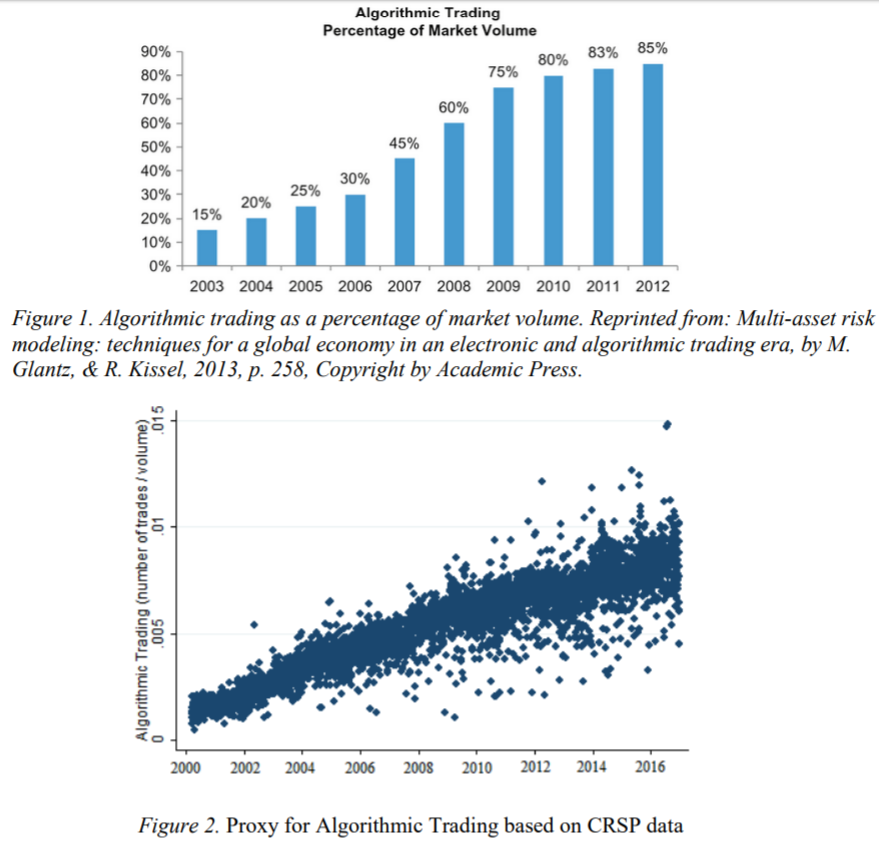
Source: Rick Verheggen
The Typical "iPhone Production Slowdown" Rumors To Happen In January?
Unfortunately, regardless of the long-term prospects of Apple, the drag on the investors" sentiment on Apple would result in a near-term weakness in its share price. What"s concerning for shareholders is that next month, there is the possibility that rumors of iPhone production slowdown return with a vengeance. The following snapshot of an article from MarketWatch sums up the issue succinctly.
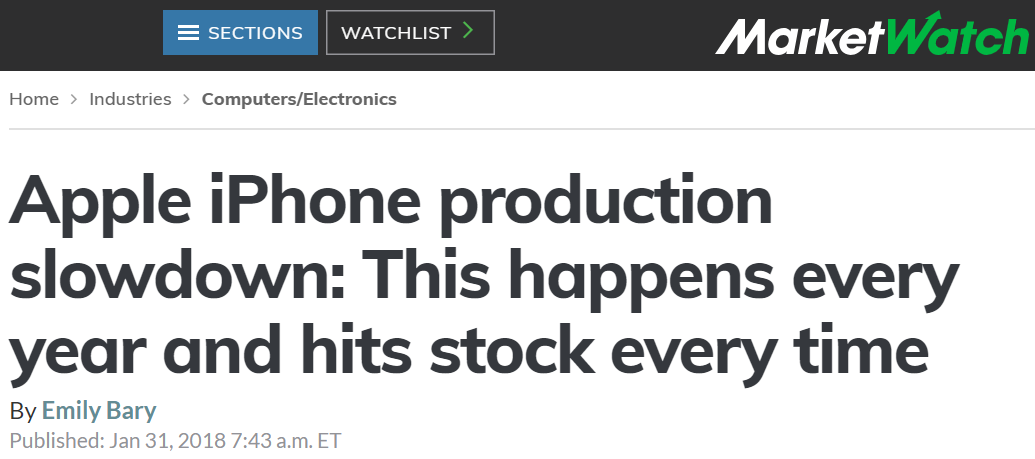
Source: MarketWatch
The bugbear for Apple management must be the perennial "iPhone sales/production slowdown" speculations that seem to recur sometime in January every year. A Google (NASDAQ:GOOG) (NASDAQ:GOOGL) search with the keywords "iPhone sales slowdown" for news around late January turns up plenty of news articles regarding the topic (see the following snapshot).
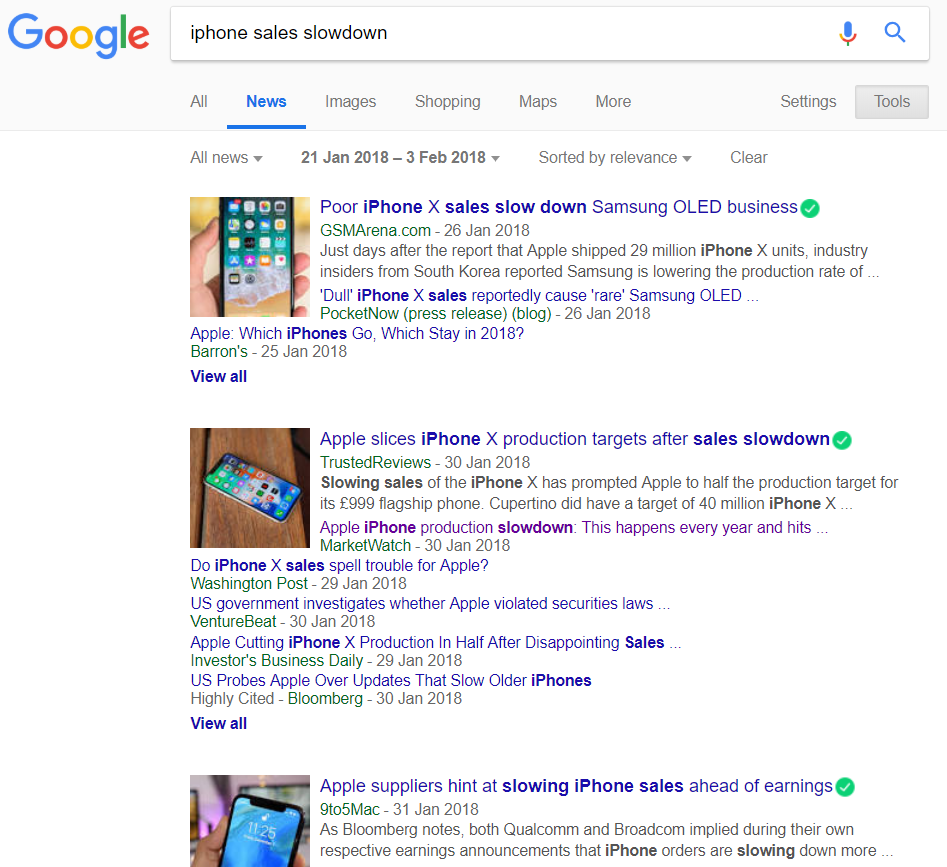
It could be supplier guidance or comments from analysts with regards to their iPhone shipment estimates. Whatever the case, to dismiss the rumors for what they are would be ignoring the consequence to the share price. This year, the iPhone company saw its share price slumped around 10 percent over the period when the sales/production slowdown topic was trending. A 10 percent drop means a loss of $78 billion in market cap based on the current level and around $100 billion if Apple regains its "trillion-dollar" crown by then. This is certainly not a trivial amount.
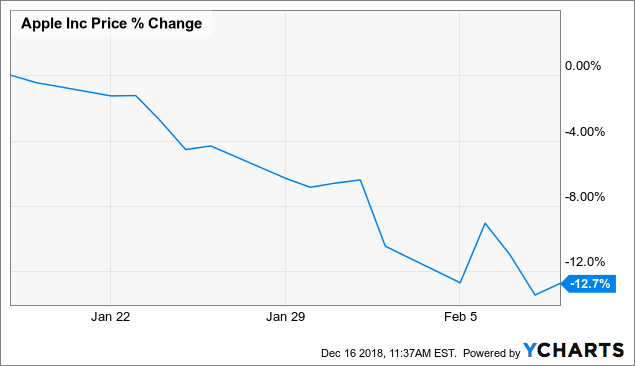
AAPL data by YCharts
Value Destruction With Ill-Timed Buybacks?
Thanks partly to the generous Republican tax cuts, listed companies have launched aggressive share buyback programs this year. The passage of the Tax Cuts and Jobs Act dubbed the Trump Tax Reforms last December resulted in the reduction of the statutory business tax rate from 35 percent to 21 percent and granted companies a limited period reprieve on returning foreign cash holdings to the United States.
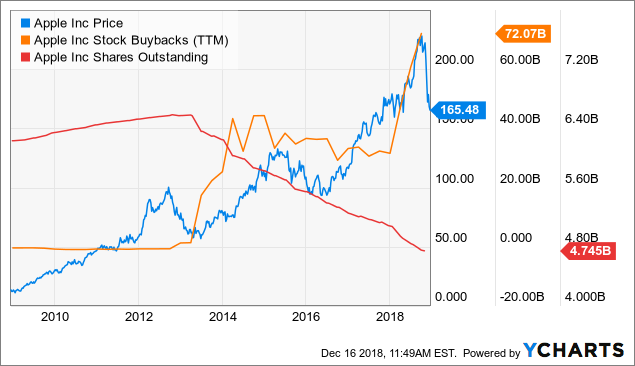
The five US tech companies with the largest cash piles - Apple, Alphabet, Cisco (CSCO), Microsoft and Oracle (ORCL) - spent more than $115 billion in the first three quarters on buying back their own stock. For Apple, in particular, the company kept up with its share repurchase even as its share price climbed to a record. On a trailing twelve-month basis, Apple stock buybacks jumped to $72.07 billion, more than doubling the around $30 billion level in the prior year.
While it, of course, took more money to repurchase a single share as the price went higher, it should be noted that there was an acceleration in the share repurchase at the same time. In the process, the outstanding share count is reduced to 4.7 billion.
AAPL data by YCharts
"No one can accurately foresee the bottom" is the common excuse for retail investors who bought into a stock only to see the share price go below the buy price. The next best alternative is probably "I bought it with a long-term perspective". Should we hold the management to a higher standard when they execute share buybacks? After all, don"t they have a better understanding of the demand for their products? Otherwise, shouldn"t we be worried?
With the apparently ill-timed buybacks, Apple executives might have disappointed shareholders due to the fewer shares the company repurchased when the price was near the peak. This raised the question if the management had been over-confident of the iPhone demand. To what extent should we rely on their guidance then?
Are Analysts Similarly Over-Confident?
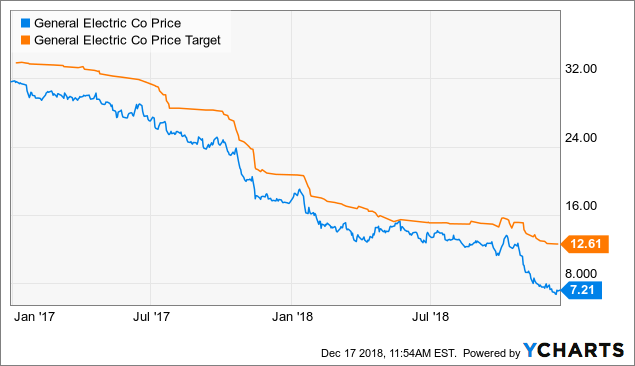
I believe avid Seeking Alpha readers are familiar with the General Electric (GE) story the past two years. We have seen how the analyst price targets keep chasing the share price downwards.
GE data by YCharts
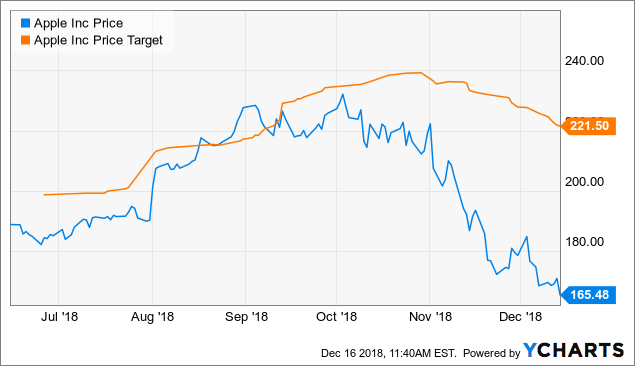
Now, I don"t mean to imply that Apple will follow in the footstep of GE. Instead, I question whether analysts will continue to revise their price targets on Apple downwards in response to the large disparity with the prevailing share price, a typical phenomenon. If that happens, what follows is perhaps a vicious cycle where market sentiment turns more bearish, the share price falls further and necessitating more price target cuts. ‘Low’ P/E ratio is not the perfect answer to whether the share price has appreciation potential or not, as Micron Technology (MU) shareholders are well aware of.
AAPL data by YCharts
Investor Takeaway
An article from MarketWatch noted how news related to a slowdown in iPhone sales or production tend to crop up every year in January. There is no guarantee that the phenomenon will recur in 2019 but when it does, Apple share price could take a hit like it did in the past.
The apparent ill-timed share buybacks by Apple hint of an over-confident management or a misjudgment of the demand of iPhones. Either way, that doesn"t give much confidence to the market in terms of their future guidance. Besides the destruction of value from the shares purchased at peak prices, the disappointment comes from knowing that Apple executives seemed no better at predicting the fortunes of their company. What else do we expect from the analysts?
I asked in November whether it"s time to revisit the bullish thesis for Apple. At that time, Apple share price was still trading above $200. I received plenty of brickbats in the comments section ostensibly from those who long the stock. I harbor no ill will against Apple shareholders. I wish to reiterate my earlier suggestion that shareholders consider strategies to limit their downside given the potential headwinds and the one-off nature of several catalysts which pushed up the stock prices previously.
Disclosure: I/we have no positions in any stocks mentioned, but may initiate a long position in AAPL, GOOG over the next 72 hours. I wrote this article myself, and it expresses my own opinions. I am not receiving compensation for it (other than from Seeking Alpha). I have no business relationship with any company whose stock is mentioned in this article.

No comments:
Post a Comment